


In a world that demands 24/7 connectivity, Charlie Kirk’s latest release, Stop, in the Name of God, argues that the ancient practice of the Sabbath is not an outdated rule, but a desperate necessity for modern mental and spiritual health. Kirk frames the Sabbath as a “radical act of resistance” against the tyranny of screens, noise, and busyness, offering a roadmap to unplug, recharge, and reconnect with what truly matters—God, family, and inner peace.
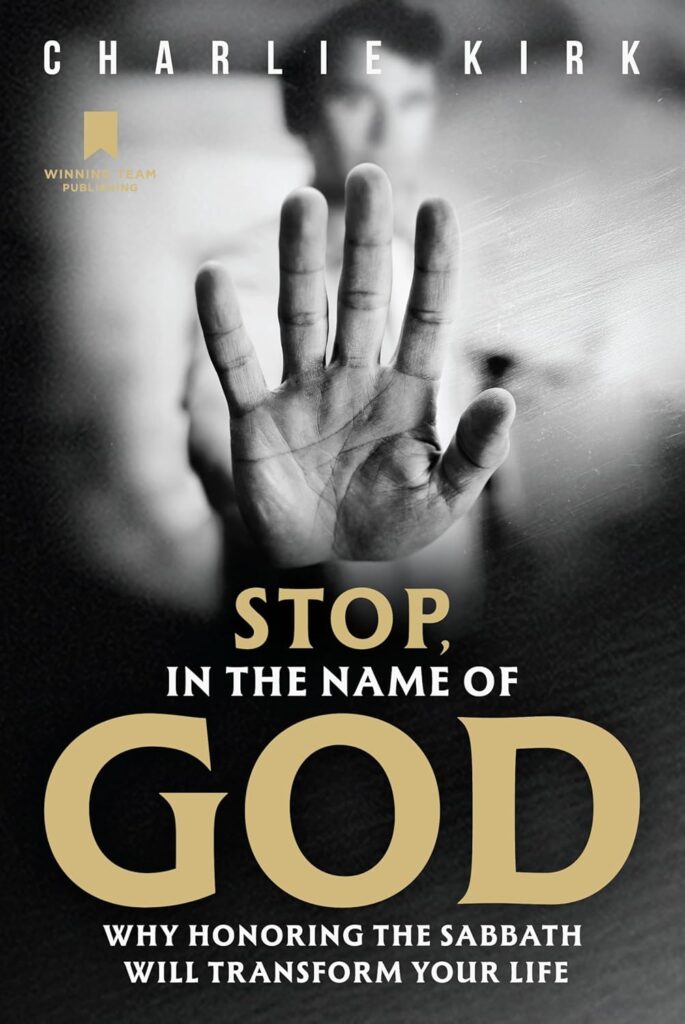
Stop in the Name of God: Why Honoring the Sabbath Will Transform Your Life
Who Is This Book For?
- The Burned-Out Professional: Anyone feeling the weight of “hustle culture” and looking for a permissible way to slow down without guilt.
- Faith-Based Readers: Christians looking to deepen their spiritual walk and understand the Sabbath beyond just attending church services.
- Parents and Families: Those worried about the encroachment of technology into their family time and looking to establish healthier household rhythms.
- Fans of Cultural Commentary: Readers interested in how traditional values can solve contemporary issues like anxiety and digital addiction.
Stop in the Name of God: Key Takeaways & Themes
- Rest as Rebellion: Kirk posits that in an attention economy, choosing to rest is an act of defiance against a culture that commodifies every waking moment.
- The Digital Detox: The book provides a spiritual framework for disconnecting from smartphones and social media, viewing constant connectivity as a barrier to the soul.
- Restoration of Relationship: The Sabbath isn’t just about “doing nothing”; it is about actively making space for face-to-face connection with family and intentional prayer with God.
- Anxiety Reduction: Kirk draws a direct line between the loss of a designated rest day and the modern spike in anxiety and depression, suggesting the Sabbath as a holistic cure.
What Makes It Stand Out
What distinguishes this book from standard “digital detox” self-help guides is its theological foundation combined with Kirk’s signature directness. While many books suggest putting the phone away to “be more productive later,” Kirk argues we should do it to save our souls. It treats the Sabbath not as a legalistic burden, but as a life-giving gift—a “lifeline” rather than a rulebook. Released in late 2025, it feels particularly timely as society grapples with the peak saturation of AI and digital noise.
Pros & Cons
Pros:
- Timely Message: Addresses the immediate crisis of digital overload and mental fatigue relevant to 2025 readers.
- Actionable Advice: Moves beyond theory to offer practical ways to implement Sabbath practices in a high-tech world.
- Strong Reader Reception: Early reviews suggest it resonates deeply with readers seeking permission to unplug.
- Accessible Writing: Written in a clear, engaging style that makes complex theological concepts easy to digest for the layperson.
Cons:
- Polarizing Author: Charlie Kirk is a well-known political figure; readers who disagree with his politics might hesitate to pick this up, even though the topic is largely spiritual and lifestyle-focused.
- Specific Niche: The advice is heavily rooted in Judeo-Christian tradition, which may not resonate as fully with secular readers looking for a purely psychological approach to rest.
Reader Reviews Snapshot
Since its release just days ago, the book has garnered strong praise, sitting at a 5.0 out of 5 stars on Amazon and 4.4 on Goodreads.
- Recurring Praises: Readers frequently mention that the book gave them the “push they needed” to finally put their phones down. Many describe it as a “wake-up call” and appreciate the focus on family restoration.
- Critiques: A minority of feedback notes that while the diagnosis of the problem (busyness) is spot on, the religious solution might feel exclusive to those outside the faith.
Stop in the Name of God: Final Thoughts
Stop, in the Name of God is a compelling manifesto for anyone tired of the noise. Whether you are a long-time follower of Charlie Kirk or simply someone exhausted by the glowing rectangle in your pocket, this book offers a persuasive argument for hitting the brakes. It is best suited for readers open to faith-based solutions for modern mental health struggles. If you are looking to reclaim your time and sanity in 2026, this might be the most important read of your year.
Contact Us
We would love to hear from you! Here’s how you can reach us:
Feel free to reach out with any questions, concerns, or suggestions! We’re here to help

