


Whistler by Ann Patchett Review – Few writers navigate the quiet, subterranean architecture of human relationships with the warmth, precision, and grace of Ann Patchett. For decades, her novels have served as literary sanctuaries, celebrating the extraordinary nature of ordinary lives and the deep bonds that form outside traditional family units.
When a new piece of fiction by the author of The Dutch House and Tom Lake is announced, the literary world takes note. Her eleventh novel, Whistler, arrived with massive expectations, quickly securing its status as a Katie Couric Book Club Pick, a Good Housekeeping Book Club Pick, and tracking as a major Goodreads choice.
For readers deciding whether to invest their precious time and money into this new release, this comprehensive Whistler review provides an analytical, honest, and look at Patchett’s latest offering. Does it live up to the monumental hype, or does it retreat too far into quiet introspection? Let’s find out.
Whistler by Ann Patchett: Quick Review
| Feature | Details |
| Title | Whistler |
| Author | Ann Patchett |
| Genre | Literary Fiction / Contemporary Fiction |
| Publication Year | 2026 |
| Overall Rating | ★★★★★ (4.5 / 5) |
Recommended For
- Devoted fans of Ann Patchett books who enjoy slow-burning, character-driven narratives that privilege emotional depth over breakneck pacing.
- Readers who appreciate nuanced deep dives into unconventional family dynamics, step-parenting, and the restructuring of childhood memories.
- Anyone seeking comforting yet intellectually sharp emotional fiction novels that celebrate the capacity for human kindness and platonic reconciliation.
Not Recommended For
- Readers who prefer plot-driven thrillers, fast-paced mysteries, or novels with intense physical action and high-stakes external conflict.
- Those who find highly reflective, introspective, or narrative structures frustrating or slow.
What Is Whistler About?
The premise of the Whistler novel hinges on a beautifully simple, chance encounter that shatters more than four decades of silence. The story introduces us to Daphne Fuller, a fifty-three-year-old writing and English teacher at an elite private girls’ school on Manhattan’s Upper East Side. Settled, observant, and quietly content, Daphne leads a stable life alongside her husband, Jonathan, a patient and deeply supportive retired hospital administrator.
The trajectory of Daphne’s quiet life shifts dramatically during an ordinary afternoon stroll through the galleries of the Metropolitan Museum of Art. Jonathan observes that an elderly, white-haired gentleman has been discreetly trailing them from room to room. When Daphne finally turns to face the stranger, she is confronted by a ghost from her childhood: Eddie Triplett.
       [A Fateful New England Snowstorm]
                   │ (44 Years of Separation)
                   ▼
[The Metropolitan Museum of Art Chance Encounter]
                   │
                   ▼
  [A Rebirth of Connection and Truth]
Eddie was Daphne’s stepfather for a brief, fleeting period when she was nine years old. He was married to her fiercely independent, pragmatic mother, Abigail, for just over a year before a swift divorce erased his name, his presence, and his face from Daphne’s life completely. Yet, despite the brevity of that marriage, the bond between the young girl and her stepfather was forged in fire—or rather, in ice.
The novel deftly moves back and forth between the present-day rekindling of their relationship in New York and a harrowing, foundational memory from Daphne’s childhood in Winchester, Massachusetts. On a freezing winter night, a young Daphne and Eddie were driving through a blinding New England snowstorm when their vehicle careened violently off the road and trapped them in a ditch. With Eddie’s ankle severely crushed and the cold closing in, he kept the terrified young girl calm by telling her the mesmerizing story of “Whistler”—a majestic chestnut mare owned by a woman named Mary Carter, who undergoes a profound, metaphysical experience after a near-fatal fall from the horse.
To save her stepfather’s life, nine-year-old Daphne was forced to climb out of the crushed metal wreckage, stepping alone into the howling blizzard to seek rescue. She survived that terrifying journey by clinging to a simple, fundamental truth Eddie told her before she left: “Everyone’s nice” and would want to help her.
Decades later, as the adult Daphne and the aging Eddie resume their relationship in the twilight of his life, the emotional stakes of the novel come into sharp focus. This is not just a sweet story of a reunion; it is a profound search for truth. Over afternoon tea and long walks, Daphne uncovers the hidden realities of her childhood, including the real reason her mother divorced Eddie. She learns about Eddie’s hidden identity as a gay man navigating a less tolerant era, and his lifelong, secret love affair with his married best friend, Skip. In doing so, the book transforms into an exploration of the choices made for us in our youth, and how we re-evaluate them as adults.
Why This Novel Stands Out
In a contemporary literary landscape that heavily favors high-concept hooks or bleak, cynical worldviews, Whistler stands out by choosing a path of radical gentleness and deep emotional realism. It is an extraordinary example of how a master of literary fiction review metrics can take a fundamentally quiet premise and imbue it with the narrative tension of a thriller.
          [Crystalline Prose & Restraint]
                         │
         ┌───────────────┴───────────────┐
         ▼                               ▼
[Emotional Storytelling]        [Alternating Structures]
Grounded in daily life;         Seamless shifts between
avoids cheap manipulation.      museum galleries & blizzards.
The Unconventional Love Story
The relationship between Daphne and Eddie is the glowing center of the book. It is a platonic, intergenerational love story that defies the rigid boundaries of legal or biological definition. Patchett reminds us that a person does not need to be in our lives for a long time to shape our souls permanently. The sheer decency with which Daphne, Eddie, and even Daphne’s husband Jonathan treat one another feels incredibly fresh and rewarding. There are no manufactured misunderstandings or explosive domestic screaming matches here; instead, the tension arises from the natural, bittersweet march of time and the desire to truly know another person before it is too late.
A New Look at Memory and Time
What makes Whistler by Ann Patchett stand out is its brilliant handling of subjective memory. Patchett shows how children process trauma and family secrets, creating clean, simplified narratives to protect themselves. As an adult, Daphne is forced to widen her view, realizing her mother wasn’t just a harsh divorcee, and Eddie wasn’t just an idealized savior, but flawed human beings doing their best under the constraints of their historical eras.
The Emotional Impact
Reading Whistler is an experience wrapped in deep nostalgia, a quiet sense of regret, and eventual healing. Patchett possesses a unique ability to evoke a profound emotional response without resorting to cheap sentimentality or manipulative plot twists.
The book forces the reader to look inward, prompting us to reflect on our own forgotten mentors, former step-parents, or long-lost childhood figures who left an imprint on who we became. The grief in the novel is balanced by the beauty of the human connection Daphne and Eddie share. It reminds us that while the stream of loss comes for us all, the feeling of being genuinely known by even one other person can anchor a soul across decades of isolation.
Ann Patchett at Her Best?
Where does Whistler sit within the pantheon of Ann Patchett books? For long-time readers, this novel represents both a familiar return to her favorite themes and an evolutionary step in her craftsmanship.
[The Dutch House] ─── (Sharp Resentment / Stepmother)
                               ▲
                               │ [Comparative Focus]
                               ▼
  [Whistler Novel] ─── (Enduring Love / Stepfather)
Structurally, the book shares a strong bond with The Dutch House, which similarly focused on childhood memories and the long-term impact of step-parents. Yet, while The Dutch House was driven by a deep, lingering resentment toward an stepmother, Whistler operates as its inverted mirror image: a story about enduring love and gratitude for a lost stepfather.
Style-wise, it carries the cozy, reflective, almost essayistic tone of Tom Lake. Patchett wrote both novels on her treadmill desk while recovering from chronic physical pain, and that rhythmic, steady focus shines through the writing. It feels incredibly confident, unhurried, and completely unruffled by the need for traditional plot mechanics. While some fans might miss the sprawling canvas of Bel Canto or the sweeping narrative architecture of Commonwealth, many will view Whistler as her most mature, distilled, and emotionally direct novel yet.
What I Loved About Whistler
1. Exceptional Character Development
Patchett’s characters are deeply human. Daphne is a brilliant protagonist—grounded, practical, and possessing an intuitive affinity for the older men in her life (manifested in her humorous admission that “old guys love me”).
Eddie Triplett is a triumph of characterization. As a retired New York book editor from the 1970s and 80s, he carries himself with a sharp intellect and a quiet, dignified elegance. He is a gentle soul who preserved his generosity and warmth despite living through an era that forced him to hide his true self.
2. The Claustrophobic Suspense of the Childhood Timeline
While the contemporary scenes in New York are gentle and conversational, the flashback sequences to the winter storm in Winchester are genuinely gripping. Patchett builds a staggering amount of sensory suspense out of the howling whiteout, the bitter cold, and the terrifying vulnerability of a nine-year-old girl stepping out into a blizzard to save her stepfather. This balance prevents the book from ever feeling flat.
3. Crystalline Prose and Dialogue
The dialogue between the aging Eddie and the adult Daphne is masterfully written. It captures the hesitant, joyful, and occasionally delicate rhythm of two people getting to know each other all over again. Patchett’s prose is deceptively simple, achieving maximum emotional impact with clean, beautiful sentences.
What May Not Work for Every Reader
While Whistler is an outstanding piece of best literary fiction novels craftsmanship, it is not a book designed for everyone.
The pacing is deliberately slow and introspective. The novel prioritizes memory, long conversations over tea, and internal emotional shifts over external action. If you require high-octane plot twists, high stakes, or constant forward motion, you may find yourself growing restless during the extensive reflective sequences.
Additionally, the fable-like subplot involving the horse, Whistler, and Mary Carter’s near-death experience features elements of light magical realism. While it serves as an evocative thematic echo of survival and near-death comfort, readers who prefer strict, unyielding realism might find it a slight detour from the main narrative track.
Best Quotes and Memorable Moments
While we must experience the book firsthand to fully appreciate the context of Patchett’s observations, several moments stand out as central to the novel’s power:
- The Met Confrontation: The initial scene where Daphne turns around in the gallery to face the old man following her is a masterclass in tension, delivering an immediate wave of emotional recognition that sets the entire book in motion.
- The Lesson in the Blizzard: When Eddie sends a young Daphne into the snow with the instruction that “everyone’s nice and wants to help,” it stands as a beautiful, defining statement. It isn’t just a strategy to keep a child brave; it represents the generous worldview that shapes Daphne’s character for the rest of her life.
- The Metaphor of the Horse: The story of the chestnut mare, Whistler, serves as a beautiful meditation on the sweetness and impermanence of life, highlighting how love can cross boundaries to pull us back from the brink of despair.
Who Should Read Whistler?
- Literary Fiction Enthusiasts: If you look for novels that prize psychological realism, profound character development, and immaculate prose, this belongs at the top of your reading list.
- Book Clubs Looking for Rich Material: Whistler is an ideal book club selection. The complex family trees, the historical constraints of Eddie’s hidden life, and the question of how we rewrite our own childhoods provide hours of fascinating discussion.
- Fans of Quiet, Restorative Fiction: If you are feeling overwhelmed by the fast pace of modern life or the cynicism of contemporary media, this novel acts as a warm, comforting reminder of human decency.
Who might want to skip it? If you are in the mood for an edge-of-your-seat thriller, a fast-moving plot, or a traditional romance, you would be better served looking elsewhere in our contemporary fiction catalog.
Final Thoughts: Is Whistler Worth Reading?
Ultimately, Whistler by Ann Patchett is an absolute triumph that more than lives up to its immense summer anticipation. It is a rare literary gift: a novel that manages to be simultaneously majestic and intimate, deeply devastating yet profoundly uplifting.
It offers a reading experience that feels like opening an old shoebox filled with treasured family photographs—quietly moving, deeply personal, and layered with the beautiful texture of passing time. Patchett reminds us that our hearts are always capable of expanding their circumference, and that it is never too late to welcome back the people who truly shaped us.
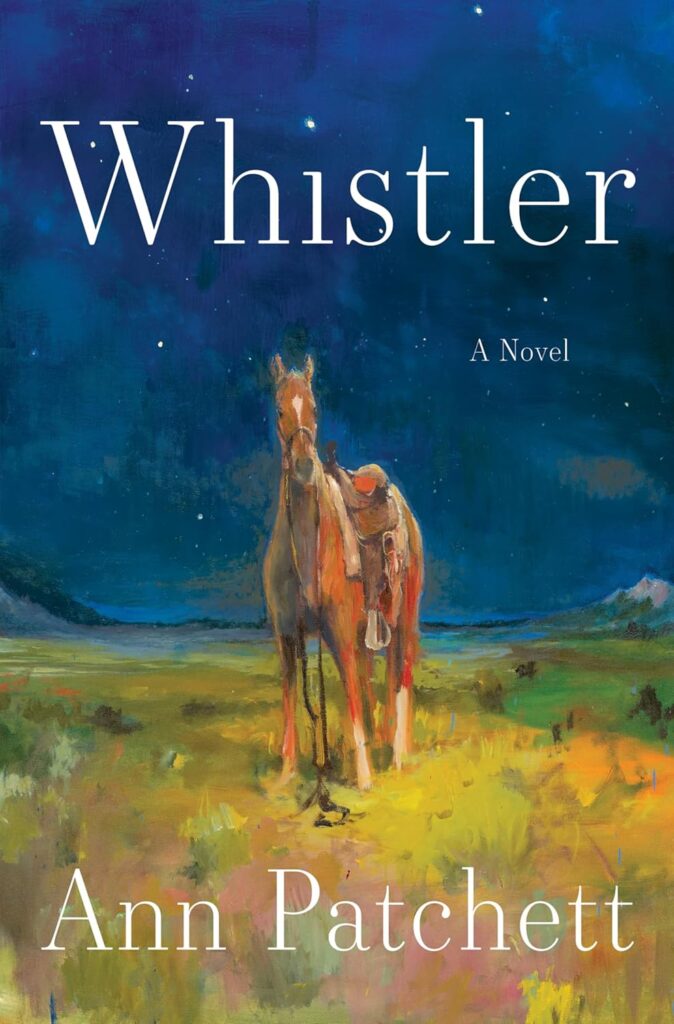
Whistler by Ann Patchett on Amazon
Final Rating: ★★★★★ (4.5 / 5 Stars)
Join the Conversation!
Are you planning to add Whistler to your reading list this season? If you’ve already read it, how did you feel about Daphne and Eddie’s emotional journey? Let us know your thoughts in the comments below, or click the link to purchase your copy today!
To hear more about the real-world experiences that inspired this narrative, watch this brief interview with Ann Patchett discussing Whistler, where she explores how aging transforms our relationships and the profound conversations we share later in life.
We would love to hear from you! Here’s how you can reach us: Feel free to reach out with any questions, concerns.


