


The Mountain Is You operates on a powerful, central metaphor: the mountain standing between you and the life you want is not an external obstacle, but your own internal resistance. Brianna Wiest dissects the psychology of self-sabotage, explaining that it isn’t merely “punishing yourself,” but rather a misguided attempt by your subconscious to keep you safe. It serves as a manual for stepping out of your own way and building emotional intelligence.
Who Is This Book For?
- The “Stuck” Achiever: People who know exactly what they need to do to succeed but find themselves physically or mentally unable to take the first step.
- Cycle Breakers: Individuals looking to understand why they repeat toxic patterns in relationships, careers, or health.
- Empaths and Introspectives: Readers who appreciate a writing style that blends psychological insight with a poetic, gentle delivery.
- Transitioners: Anyone currently going through a major life change (breakups, career pivots) who feels paralyzed by the fear of the unknown.
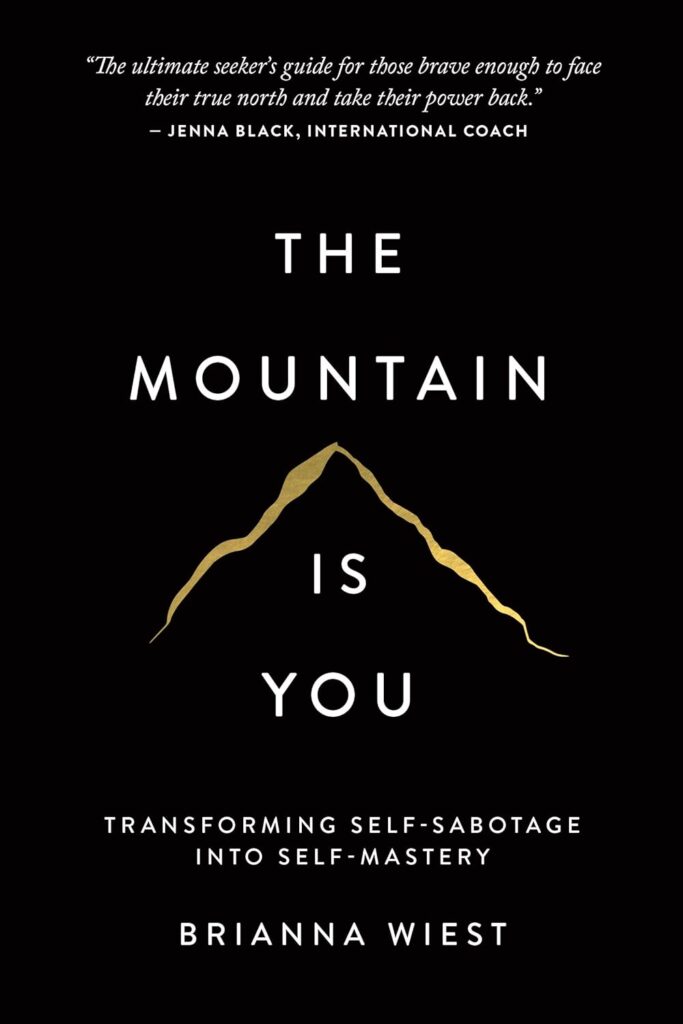
The Mountain Is You: Transforming Self-Sabotage Into Self-Mastery
Key Takeaways or Themes
- Sabotage is Safety: Wiest argues that self-sabotage is actually a defense mechanism. Your brain prioritizes what is familiar (even if it’s painful) over what is new (even if it’s better).
- Triggers as Guides: Instead of ignoring negative emotions or triggers, the book encourages you to use them as a map. They reveal exactly where your unhealed wounds are.
- Gut Instinct vs. Fear: A crucial distinction is made between intuition (which is quiet and steady) and fear (which is frantic and loud). Learning to tell them apart is key to mastery.
- Building Emotional Resilience: The goal isn’t to eliminate difficult feelings but to increase your capacity to process them without shutting down.
- Micro-Shifts: Big changes happen through small, mundane adjustments in daily habits, not just grand epiphanies.
What Makes It Stand Out
What sets The Mountain Is You apart from other self-help titles like Atomic Habits or The Power of Habit is its focus on the emotional root of the problem rather than just the behavioral symptoms. Wiest has a very distinct voice—empathetic, almost lyrical, yet firm. She doesn’t just bark orders at you; she validates the pain of staying stuck before gently guiding you out of it. It feels less like a textbook and more like a long conversation with a wise, non-judgmental friend.
The Mountain Is You Pros & Cons
Pros:
- Deeply Empathetic: Wiest validates the reader’s struggles without enabling them, creating a safe space for self-reflection.
- Highly Quotable: The writing is concise and impactful, making complex emotional concepts easy to digest and remember.
- Actionable Insights: While philosophical, it provides clear mental frameworks for identifying specific behaviors (like perfectionism or procrastination) and dismantling them.
Cons:
- Repetitive Structure: Some readers may find that the core message is restated frequently throughout the chapters, just phrased differently.
- Lacks Scientific Rigor: This is a philosophical and observational self-help book, not a clinical psychology paper. Readers looking for hard data or neuroscience studies might find it too abstract.
Reader Reviews Snapshot
Across various platforms, the reception is overwhelmingly positive but with a specific caveat.
- The Fans: Many readers describe it as “life-changing” and “the wake-up call I needed.” The section on distinguishing intuition from anxiety is frequently cited as a favorite takeaway.
- The Critics: A minority of readers feel the book could have been an essay or blog post, citing the repetition. Some felt the advice was a bit vague for deep trauma, suggesting therapy as a better alternative for serious issues.
Final Thoughts
The Mountain Is You: Transforming Self-Sabotage Into Self-Mastery
The Mountain Is You is an excellent entry point for anyone ready to take responsibility for their own happiness. It shines brightest when you are in a period of stagnation and need a compassionate push to get moving again. While it may not replace clinical therapy for deep-seated trauma, it serves as a powerful companion for introspection and emotional maturation. If you are tired of getting in your own way, this book provides the map to scale the mountain.
Conntact us: We would love to hear from you! Here’s how you can reach us:
Feel free to reach out with any questions, conce


