


Dan Brown is back. After an eight-year hiatus since Origin (2017), his signature character, Robert Langdon, returns in The Secret of Secrets — a novel that mixes code-breaking, history, science, and big philosophical questions about human consciousness. If you’ve been waiting for another Langdon adventure filled with ancient myths, conspiracies, and high stakes, this book promises to deliver.
In this review, we’ll explore what The Secret of Secrets gets right, where it stumbles, and whether it’s worth grabbing — especially if you enjoy thrillers that pose questions as much as they reveal secrets.
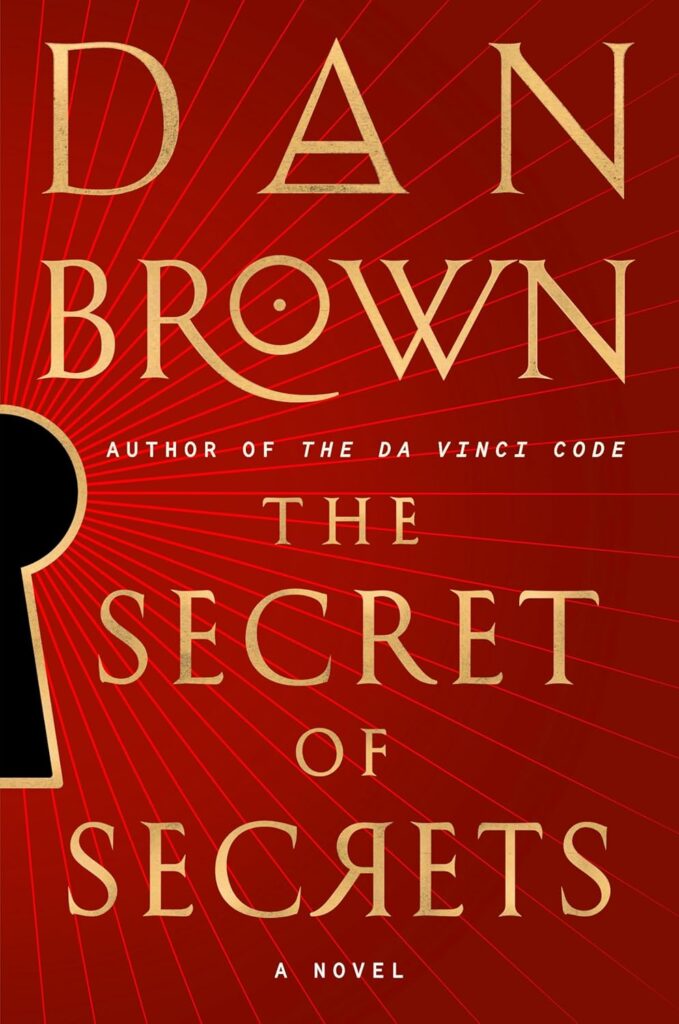
The Secret of Secrets by Dan Brown
| Detail | Information |
|---|---|
| Title | The Secret of Secrets |
| Author | Dan Brown |
| Series | Robert Langdon (Book #6) (Wikipedia) |
| Release Date | September 9, 2025 (Wikipedia) |
| Pages | 688 (Wikipedia) |
| Genres | Mystery, Thriller, Conspiracy, Science & Spirituality (Dan Brown Official Website) |
Plot Summary (No Major Spoilers)
Robert Langdon, the Harvard symbologist, travels to Prague to attend a lecture by Katherine Solomon, a scientist in the field of noetics — someone researching consciousness and its mysteries. Katherine has made discoveries she believes could upend centuries of belief about what it means to be aware. (Dan Brown Official Website)
But things go sideways fast: a brutal murder during the lecture, Katherine disappears together with a radical manuscript she was about to publish, and Langdon finds himself entangled in a global conspiracy. (PenguinRandomhouse.com)
He faces threats from a shadowy organization, pursuers from Prague’s mythic past (including a figure inspired by the golem myth), and must follow clues that take him across Prague, London, and New York. His goal? Find Katherine, uncover the truth behind her research, and reveal the project that could change our understanding of the human mind. (Dan Brown Official Website)
What Works Well
- Big Themes & Intellectual Ambition
The Secret of Secrets isn’t just another adrenaline-pumped thriller. It engages with large, provocative ideas — consciousness, what it means to be aware, the boundary between science and spirituality. For readers who like more than just chasing villains, these themes give weight. (Los Angeles Times) - Signature Dan Brown Style
If you like plot twists, secret manuscripts, mysterious symbology, and puzzles embedded in history and science, this delivers. The pacing is fast. The settings are atmospheric (Prague in particular is richly drawn). There’s plenty of suspense, chase sequences, and layers of mythology. (PenguinRandomhouse.com) - Strong Female Lead
Katherine Solomon is more than a damsel in distress. Her work, her science & the threats against her research are central. She drives much of the plot via her discoveries. It offers more depth to the character dynamics than in some previous Langdon books. (Dan Brown Official Website) - Blending of Science & Mythology
The intersection of modern noetic science (research into consciousness) with ancient legends, religious symbolism, and myth offers an intriguing mix. This blend is classic Dan Brown, and one of his strongest hooks. (Los Angeles Times)
What Might Not Appeal to Everyone
- Length & Depth vs. Speed
At 688 pages, with lots of infodumps (scientific explanations, mythological background, historical trivia), the book can feel heavy. Sometimes the pace slows when exposition kicks in. If you prefer lean narratives, this might test your patience. (The Guardian) - Writing Style Criticism
Reviewers have pointed out clichés, moments of overwrought description, predictable tropes, and some implausible plot turns. If you’re reading purely for literary style, you might find this less satisfying. (The Guardian) - Pseudoscience / Suspension of Disbelief
The scientific premises (consciousness existing outside the brain etc.) edge into speculative and sometimes controversial territory. If you require rigor or well-grounded science, some claims may feel stretched. The conspiracy angles, secret societies, etc., also require suspension of disbelief. (Los Angeles Times) - Similarities to Past Works
Some critics observe the formula is familiar: Langdon gets pulled into another global conspiracy, codes, lost manuscripts, villainous organizations. If you’ve read many of Brown’s previous books, some parts may feel repetitive. (The Guardian)
Should You Read It?
Ideal For:
- Fans of The Da Vinci Code, Angels & Demons, or Origin who enjoy Brown’s elaborate plot weaving.
- Readers who like thrillers with philosophical or scientific undercurrents.
- Those who enjoy detailed settings (Prague, mythology, historical architecture) and immersive background.
Maybe Skip If:
- You prefer tight pacing with minimal digressions or exposure to speculative science.
- You’re more interested in literary style than plot & theme.
- You don’t enjoy long books with many subplots and information sections.
Pros & Cons at a Glance
| Pros | Cons |
|---|---|
| Rich themes (consciousness, myth, science) | Lengthy, sometimes bogged down in exposition |
| Memorable settings & atmosphere | Clichéd prose & some formulaic elements |
| Strong female character (Katherine Solomon) | Science sometimes leans toward pseudoscience |
| Intriguing mythology & symbolism | Repetitive tropes for longtime Brown readers |
Reader Guide & Tips
- Read in sequence (optional): while this is book 6 of the Langdon series, you can pick it up without reading all preceding ones. But knowing previous Langdon books gives better context.
- Keep notes: There are many clues, symbols, myth references. If you’re reading for fun, let it flow. If you’re trying to crack puzzles yourself, keep a notebook.
- Discussion interest: Big themes mean this book is good for book clubs / discussion groups. Consciousness, the meaning of symbols, the nature of belief—excellent material for debate.
Final Verdict
Dan Brown’s The Secret of Secrets is a bold return. It may not reinvent his formula, but it stretches it: adding ambitious science-philosophy stakes, deep mythological roots, and emotional weight via the Langdon/Solomon relationship. For fans of his work, it’s a satisfying ride; for newcomers, it’s a grand thriller that delivers on spectacle, mystery, and big questions.
If you love puzzle-filled adventure, secret manuscripts, and stories that make you think about what we really know — this book is worth your time.
